How the Bots Work
The computer opponents in Trickster's Table use simulation-based techniques to find good moves. Here's how.
Monte Carlo Tree Search (MCTS)
Trickster's Table bots use Information Set Monte Carlo Tree Search (ISMCTS). Instead of following fixed rules, the bot simulates many possible game outcomes and picks moves that tend to work well.
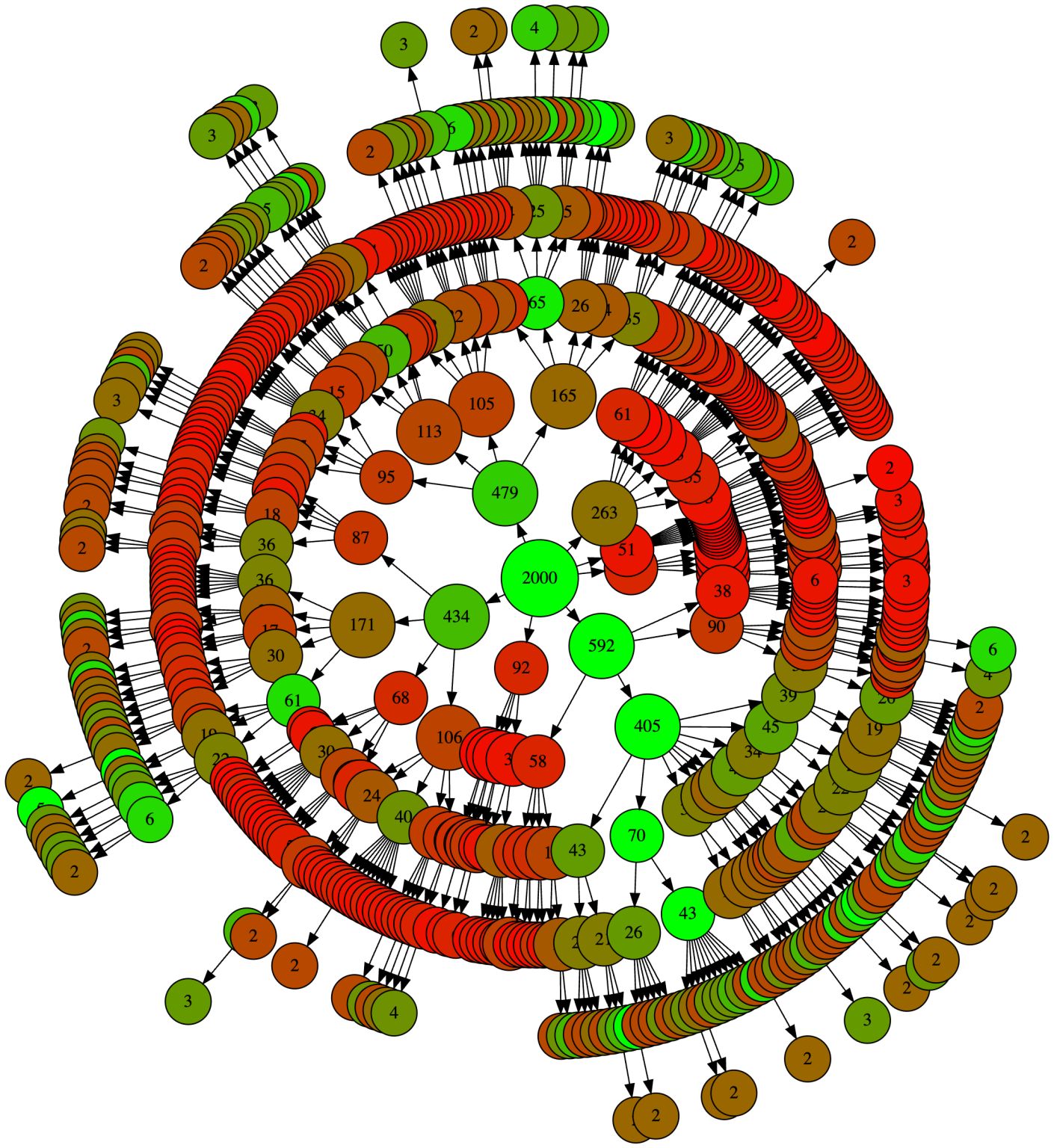
A visualization of an MCTS search tree. Each node represents a game state, with numbers showing how many times that state was explored. Green nodes indicate favorable positions, red nodes indicate unfavorable ones.
How It Works
For each move, the bot:
- Simulates hundreds to thousands of possible game continuations
- Explores promising branches more deeply
- Balances trying new things vs sticking with what works
- Selects the move that was explored the most (so therefore must be the most promising)
The "Information Set" part handles hidden cards. The bot considers many possible hands its opponents might have and selects moves that proved to be the most promising through experimentation. Here is an example of this logic in Trick or Bid.

What is Trickster's Table?
A delicious trick taking buffet
A collection of trick-taking card games handpicked by supporters, with challenging but fair AI opponents. 100% free. No microtransactions. No ads.


Neural Networks
Some older games use neural networks trained with SIMPLE (Selfplay In MultiPlayer Environments) to guide the search. The network learns from self-play games to recognize good positions.
Pure ISMCTS often works just as well without the overhead of neural network inference. Newer games use pure ISMCTS with 500-1000 iterations per move.
Games with large branching factors benefit from having the search biased by a trained neural network. Shedding games and games with complex bidding play much better with a trained network.
Game Implementations
| Game | Neural Network | ISMCTS (Dart) | ISMCTS (Rust) |
|---|---|---|---|
| Best of Neapolitan | ✓ | ✓ | |
| Yokai Septet (2p) | ✓ | ✓ | ✓ |
| Potato Man | ✓ | ✓ | |
| Magic Trick | ✓ | ✓ | |
| Yokai Septet (4p) | ✓ | ✓ | |
| Short Zoot Suit | ✓ | ||
| Dealer's Dilemma | ✓ | ||
| Hotdog | ✓ | ||
| Kansas City | ✓ | ||
| The Six of VIII | ✓ | ||
| Torchlit | ✓ | ||
| Pala | ✓ | ||
| Stick 'Em | ✓ | ||
| Trick or Bid | ✓ |
Newer games are implemented in Rust, which runs faster than Dart and allows more simulations per move.
Why This Approach?
MCTS-based bots are:
- Fair - They don't cheat or see hidden cards
- Flexible - They find strategies without hardcoded rules
- Challenging - Simulating many games helps find strong plays; higher difficulty levels run more simulations
"The AI is challenging"
— Daniel R.
"Generally, not too easy, not too hard - a Goldilocks level of AI."
— mudshark baby
Further Reading
- Reducing the burden of knowledge: Simulation-based methods in imperfect information games
- SIMPLE: Selfplay In MultiPlayer Environments
- Rust ISMCTS Library by Deliquescence
Special thanks to Deliquescence for the excellent Rust ISMCTS library that powers many of the bots in Trickster's Table.